Which catacomb is best in Rome?
Ready to go underground?Every tour here ends up on the same staff-led walk. Pick the one whose journey you want.
Compare the sixThe seven, and the day each one is shut
More than sixty catacombs are known around Rome. Seven are open to the public, and they share a tariff: €10 full, €7 reduced, plus €2 if you book online. All of them are guided-only, and photography is banned at every one. The column that decides most itineraries is the middle one.
| Catacomb | Closed on | What makes it different |
|---|---|---|
| San Callisto, V. Appia Antica 110 | Wednesday | The “little Vatican” — nine popes in one crypt, sixteen in the complex; the largest and best known |
| San Sebastiano, V. Appia Antica 136 | Monday | Gave the world the word “catacomb”; the Triclia graffiti to Peter and Paul; a Bernini bust upstairs |
| Domitilla, V. delle Sette Chiese 282 | Tuesday | Rome’s only semi-underground basilica; 17 km of tunnels, four levels, around 150,000 burials |
| Priscilla, V. Salaria 430 | Monday | The “queen of the catacombs” — the fresco considered the oldest image of the Virgin, and the Greek Chapel |
| Sant’Agnese, V. Nomentana 349 | Sunday | No frescoes at all — an epigraphic catacomb, rich in inscriptions and graffiti |
| SS. Marcellino e Pietro, V. Casilina 641 | Thursday | Officially the most frescoed catacombs in Rome; bundled with the Mausoleum of St Helena, €15 full and €12 reduced |
| San Pancrazio, P.za S. Pancrazio | Open Tue–Thu mornings only | The only one inside the city walls; largely collapsed, with one region visitable |
Check the day before you check anything else
This is the single most useful line on the page. San Callisto is closed every Wednesday, and tours sold as “the Roman catacombs” still run on Wednesdays. They go somewhere else. One of the large transfer listings sold here says so in the operator’s own words: your ticket includes entry to the Catacombs of Callixtus except Wednesdays, or the Catacombs of Domitilla on Wednesdays only.
That is honest disclosure, not a trick, and Domitilla is a good catacomb. But if you booked because you wanted to stand in the Crypt of the Popes, a Wednesday booking will not take you there. So: check the day, and check which catacomb the listing actually names. I carry that warning in more detail on the page about tours that include the transfer.
San Callisto, and why it is the default answer
Scale first. The complex runs to around 20 km of galleries by the custodians’ own reckoning — the official ticket vendor says over 10 km, so treat the figure as an order of magnitude rather than a survey. It is more than 20 metres deep, on several levels reaching five in places, across 15 hectares. An estimated half a million people were buried in it. The guided route covers a small fraction of that, and gates close off everything beyond.
What you go down for is the Crypt of the Popes, which the custodians call the little Vatican. Nine popes were buried in that one chamber, with probably eight dignitaries of the third-century Roman church, and the original Greek inscriptions of five of them survive on the walls: Pontianus, Antherus, Fabian, Lucius, Eutichian. Four tombstones carry the title bishop; two carry the Greek abbreviation MPT, for martyr. Pope Sixtus II, killed under Valerian, was laid in the front wall. A marble slab reassembled by Giovanni Battista de Rossi, who rediscovered the crypt in 1854, carries a poem by Pope Damasus.
Next door is the Crypt of St Cecilia, venerated here for at least five centuries, with early-ninth-century wall paintings of Cecilia at prayer, a niche with Christ holding a Gospel, St Urban and three martyrs. Then the Cubicles of the Sacraments: five small family chambers frescoed at the beginning of the third century with Baptism, the Eucharist and Jonah as a resurrection symbol. Sixteen popes lie in the complex as a whole, which is not the same number as the nine in the crypt, and the two get mixed up constantly.
The full sequence, in the order you walk it, is on what to expect on the visit.
Domitilla, if it is Wednesday or you want the basilica
Domitilla is the one catacomb here with a semi-underground basilica, the only one in Rome, and it is large: 17 km of tunnels on four levels with around 150,000 burials. It closes on Tuesday, so it covers San Callisto’s Wednesday and San Callisto covers its Tuesday. It also sits about nine minutes’ walk from San Callisto, which makes the two of them a realistic pair on the same morning.
Travel writers widely report that Domitilla is the one Roman catacomb where you still see bones. I have found no official source that says so, so I am not going to state it as fact. If bones are the point of the trip for you, read the section below rather than gambling on it.
San Sebastiano, for the word itself
San Sebastiano is about ten minutes’ walk further along the same road and closes on Monday. It is where the word catacomb comes from: ad catacumbas, “by the hollow”, after the quarry depression there, and only later applied to all the others. It has the Triclia graffiti, scratched invocations to Peter and Paul, and a Bernini bust upstairs. A private San Callisto road connects the two on foot and by bike, which spares you the traffic on the first stretch of the Appia — see getting there for the gate hours.
Priscilla, for the frescoes
Priscilla is on the Via Salaria, on the other side of the city from the Appia, and closes on Monday. The custodians call it the queen of the catacombs. It holds the fresco considered the oldest image of the Virgin, dated 230–240, and the Greek Chapel. Keep that word considered: both the dating and the identification are argued over, and anyone who tells you flatly that it is the oldest Marian image in the world is going further than the custodians do.
The other three
Sant’Agnese on the Via Nomentana has no frescoes at all. It is an epigraphic catacomb, rich in inscriptions and graffiti, and it is the one catacomb here that is shut on a Sunday rather than a weekday. SS. Marcellino e Pietro on the Via Casilina is officially the most frescoed catacomb in Rome and comes bundled with the Mausoleum of St Helena at €15 full, €12 reduced; it closes on Thursday. San Pancrazio is the only one inside the city walls, largely collapsed, with a single region visitable on Tuesday to Thursday mornings.
If what you want is bones, none of these is the answer
The picture most people have in their heads — walls arranged with skulls and long bones — is the Capuchin Crypt on Via Vittorio Veneto, under the church of Santa Maria della Concezione. It is a crypt under a Baroque church in the city centre, not a cemetery outside the walls, and it is not a catacomb. Around 3,700 remains, mostly Capuchin friars, line a corridor of roughly 30 metres flanked by six rooms; Turismo Roma counts nearly 4,000 and five chapels, so round it either way.
It costs €10 full and €6.50 reduced with an audioguide included, it is open every day from 09:30 to 13:30 and 14:30 to 18:30, it takes about an hour, photography is allowed for private use, and it is at Barberini on Metro line A. Every one of those is the opposite of the catacombs. If you have been picturing bones, read what is actually in the niches at San Callisto before you book anything.
So which one
San Callisto if you have one catacomb in you and you want the popes and the scale. Domitilla if it is Wednesday, or if the basilica is what interests you. Priscilla if you are a frescoes person and you do not mind crossing the city. The Capuchin Crypt if the bones were the point all along, in which case you were never really looking for a catacomb. And if you are still weighing the whole idea up, I have written a proper yes-and-no on whether San Callisto is worth visiting.
Admission at the San Callisto gate is €10, or €12 through the official online vendor, and the guiding is inside that price. The GetYourGuide entry ticket is from €14 at the time of writing and buys you free cancellation up to 24 hours before, which the official non-refundable ticket does not. The whole ladder is on the cost page.
Tours that enter San Callisto
All six meet the same staff at the same gate. What separates them is the journey. Prices below are the GetYourGuide “from” price at the time of writing, and they move.
 Most booked
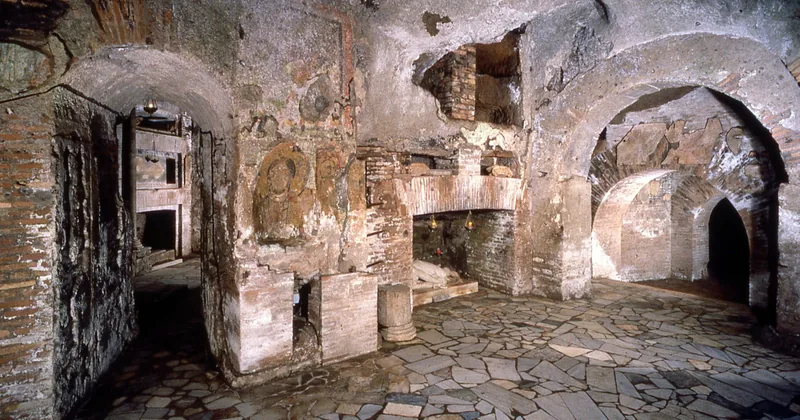
Rome: Catacombs of St. Callixtus Entry Ticket & Guided Tour
 Best rated
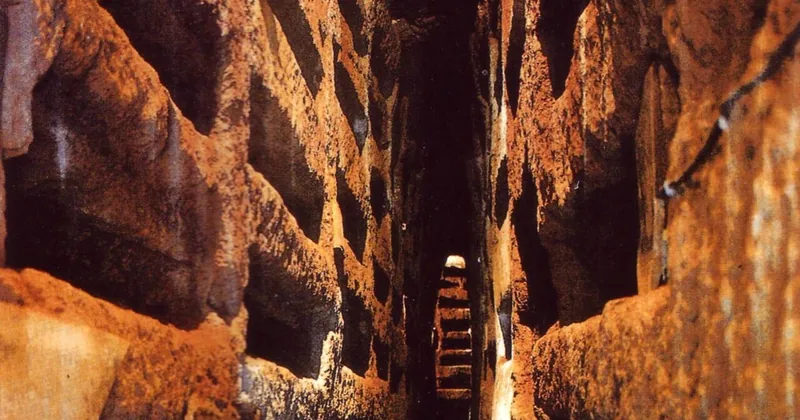
Underground Rome: San Callisto Catacombs Guided Experience
 Transfer included
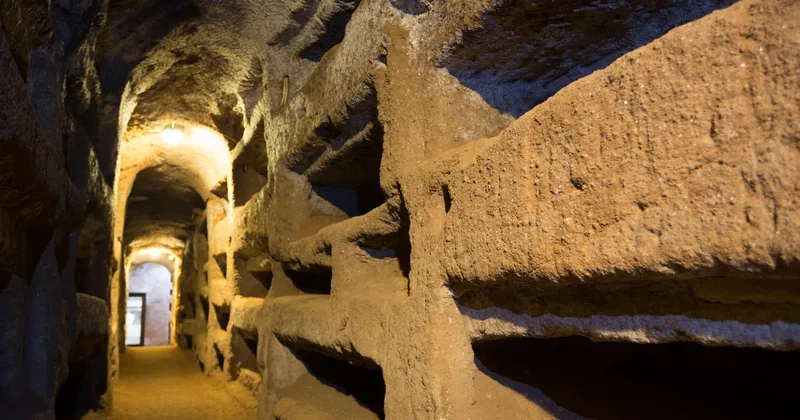
Rome: Catacombs Guided Tour with Transfer & Capuchin Option
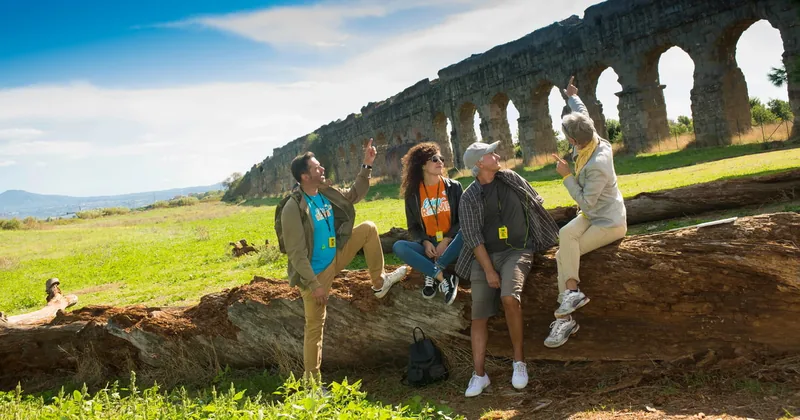 Appian Way
Rome: Catacomb of St. Callixtus and Appian Way Guided Tour
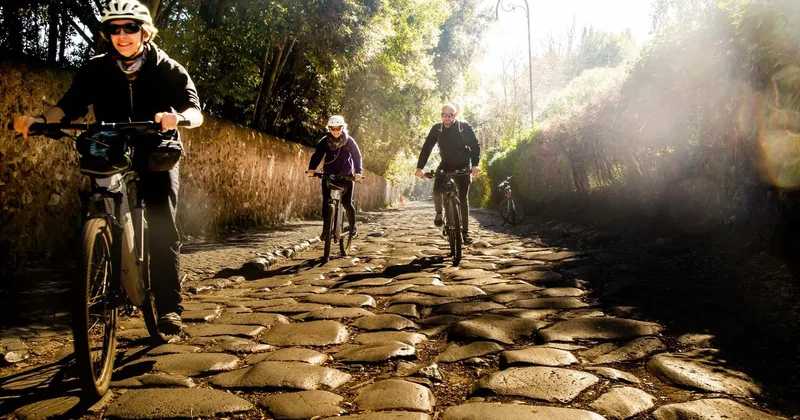 E-bike + lunch
Rome: Appian Way Underground Catacombs Bike Tour with Lunch
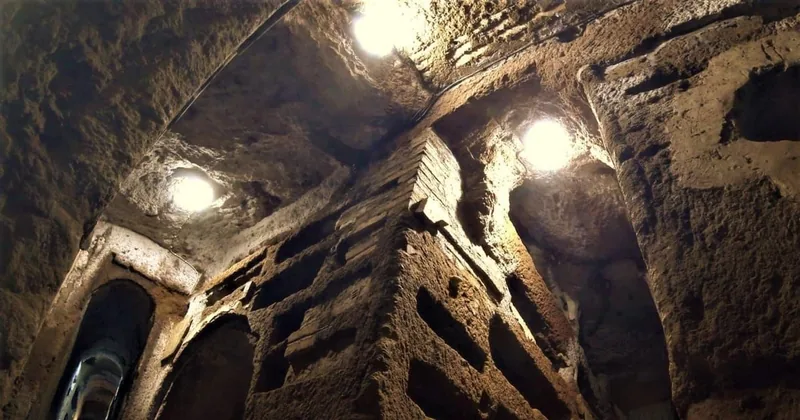 Private driver
Rome: Catacombs Guided Tour with Private Driver
Frequently asked questions
Which catacomb is the best one to visit in Rome?
San Callisto, for most visitors. It is the largest and best known of the seven open to the public and holds the Crypt of the Popes, where nine popes were buried and five Greek inscriptions survive. Check the day first though — it is closed every Wednesday, and the visit runs about 40 minutes.
How many catacombs can you visit in Rome?
Seven, out of more than sixty known around the city: San Callisto, San Sebastiano, Domitilla, Priscilla, Sant’Agnese, SS. Marcellino e Pietro and San Pancrazio. They share a tariff of €10 full and €7 reduced, plus €2 online, and every one of them is guided-only.
Which catacomb is open on Wednesday?
Not San Callisto. Domitilla is the usual Wednesday substitute, and one large transfer listing states in its own words that Wednesday departures go there instead. If the Crypt of the Popes is the reason you booked, avoid Wednesday altogether — see the transfer tours page for how that substitution works.
Which Rome catacomb has bones you can see?
None of the seven is a safe bet for that. At San Callisto the niches are open and empty, and the claim that Domitilla still has visible bones is widely repeated by travel writers but confirmed by no official source. If bones are what you want, the Capuchin Crypt at Barberini has around 3,700 remains, allows photography and opens daily. Here is the fuller answer.
Can I visit two catacombs in one trip?
On the Appia, yes. Domitilla is about nine minutes’ walk from San Callisto and San Sebastiano about ten, and a private San Callisto road links the last pair on foot and by bike. Each is a separate guided visit at the network tariff, and each has its own closing day, so line up the calendar first. Getting there and walking between them.